Philosophy
What if we exposed another way to approach E-commerce? Most of you are approaching this all at a physical level, and at an electronic (cyberspace) level. What if you could tackle this problem from another dimension. Not unlike walking through an invisible gateway, or portal, and arriving precisely at the right place at the right moment, without the burdens or restrictions of the physical or cyber dimensions much to the surprise and dismay of your competition. Albert Einstein once said, “Problems cannot be solved at the same level of awareness that created them.” This dimension I speak of is a plane of existence called the mental plane. Your thought and understanding can take you anywhere you want to be. If you put enough thought into something, before you engage the physical or electronic planes of existence, you will save yourself much time and confusion. You will also out pace your competition at every turn.
They say Hindsight is 20/20, but so is Forethought. So quit hitting that flag button so quickly forcing your way to the top, causing friction and attention, making the bots smarter as they learn from your mistakes, and re enforcing your negative situation. It might make you feel better for a while, but no one can fight through life every inch of the way. It will break you down, as it must, until the fight is gone from you. Relax, get some perspective, and read a little, educate yourself and unhook your mind from taking this all too personal. Just this advice alone can improve life as you know it, and your business. Taking this personally is just how they designed Craigslist to get rid of people who do not have the patience or foresight to relax. This is a sign of low IQ. To get rid of a certain demographic they designed their algorithm to target the impatient, and uneducated. They want to deliberately frustrate the easily frustrated, and dispatch them from Craigslist. So, don’t play into it. Don’t take it personal. Don’t post stupid things.
“Walk softly, carry big stick.”
The easiest way to fall out of favor with your creator, is to lord your power over others. Be it gifts of intelligence, or luck, or software, etc. These other persons, are someone’s children too. They have their problems as well, but they belong to their creator who is busy attempting to drive them from their idiocy into a better state of mind before their state of grace expires. I suggest you don’t interrupt this process. A worse fate awaits not the sinner, but the one who drove them to it. That said, lets get back to you, and keep concerned with your problems and solutions. My mother was a very successful business woman all her life. She has this to say after nearly 40 years of that. “There are 3 kinds of business. Your business, the other guy’s business, and god’s business. And if you just take care of your own business, the rest can cause you no problems to speak of.” I’m going to introduce you to a concept I have discovered by living it. The dragon’s pearl. I don’t read  much any more, so if this is drawing some kind of parallel with some other philosophy, so be it, but I’m unaware of it. I do more writing than reading by far nowadays. The Dragon’s pearl is a school of thought, that feeds one branch of education, or ability into the next, each supporting and strengthening each other. It will come full circle back to the beginning. This course is one large dragons pearl for instance, that’s how it was designed.
The image on your left depicts this members section in the form of a Dragon’s Pearl. It is actually a series of Dragon’s Pearls stranded together in one larger overview. We are trying to teach you how to run your whole online business without resorting to outsourcing for anything. When you out source, you lose. If you interrupt this circle, at any point, you are dead in the water. People who are employees, not entrepreneurs, are sometimes resentful, underhanded, inept, liars, dishonest, or even all of the above. Since the internet is highly unregulated, very unscrupulous persons hide around every corner offering you by suspicious coincidence the very item you need to complete your circle, as if by fate.
Is it fate? YES! But fate is the root word of fatal. Fate is what happens when you put your future in someone else’s hands and let nature take it’s course. Destiny, the root word of destination, is where you can take yourself when you take charge of your own experience. You are making a fatal mistake to depend on anyone or anything to complete YOU. This is YOU we are talking about here, not your problems, real or imagined. Take this course, take this demonstration of the concept of a Dragon’s Pearl, and make as many more of them as you can. Educate, and make something of YOU. They can take your money, your cars, foreclose on your home, but they cant take YOU. Create something no one can take. Create the one thing you will be leaving this world with when it is your time. If you choose the path of destiny, (destination) it can be described like this.. You are here to create a better, stronger, more capable resourceful YOU. This is your true destiny, (destination). When your creator calls your name, can you answer the call in a similar fashion? Can and will you want to learn how true creation is conceived? Would you not want to emulate your creator if you could see the pattern illuminated to do so?
You’re not here to waste your time kicking some tortured souls around the block disrupting their true purpose further. You’re not here to talk about how bad life is. You’re not here to see how full you can make your bank account. You can’t take that stuff with you, and you don’t have a lot of time left. If you take conjoined topics of education, and study them  with the purpose of creating such pearls of wisdom, this behavior can be likened to turning water into wine. (a true co-creator) The water is the disembodied bits of information scattered about everywhere not much more useful than fun-facts on their own, and the wine is the Dragon’s Pearl. A complete thought assembled and organized for the purpose of creation and distribution and enhancement of one’s life, and the lives of the people who would subscribe to said product. It has a flow, a direction, a cycle, and a purpose. Many of the verses and parables in the bible can be treated as a metaphor. This, I discovered by living it. If you can turn water into wine, your basket of bread will never be empty.
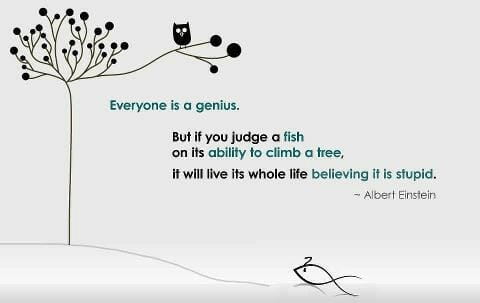
Collect those pearls. Learn to recognize an opportunity to apply your experience to a different situation, and lead the advance in that entire field. Your basket will never be empty, and you will always have abundance if you can learn to do this. If you can teach this one principal to someone else, you have just taught them to fish for a lifetime, rather than feeding them for just one day. Let’s hope you follow along so far. This pearl is one of the secrets of this life. There are more, keep digging in yourself. Once you get on the path of co-creation, things fall into place. What you thought was just blind or dumb luck before, now comes to you at a regular pace. Not quite predictable, but by no means an accident any longer. The people who made the movie/course/book the secret poke around at this principal. It’s called the law of attraction.
The genius in this series was to play into man’s superficial sense of the world. It plays into greed. You can have 3 wishes, and 3 more, and more. You can have everything. Sure, you can. In time. But you only have so much time. And there are over 100 other fundamental universal laws! But who is going to buy a book on the power of forgiveness, another universal law. Answer: not as many people who think with their checkbook. So, this the secret book has taught a generation of greedy people to be more greedy. It has given them but a fish. But the universe is a being. It tires quickly of gimme gimme and demands a payment. Time to sing for your supper, and you better know a few good tunes or you will be turned out. And so, what once worked yesterday, does not necessarily work tomorrow. Sound familiar? To learn to fish, one must have a few more of these laws studied and practiced. The law of analogy is very powerful. It gives one insight, where others do not see. You will need this in your tool kit. You need other understandings to be able to answer correctly the riddles presented to you. These tests/problems/difficulties are the gates you must pass to advance. Tick tock. Take all the time you need. But when the buzzer goes off, you better have made something of yourself worth keeping. If you learn these principals, the universe will take you on a great journey. The sun will not shine every day, but nothing will be wasted. And your bread basket will always be full, and your cup runneth over with your own wine.
 Not all of you follow everything written here, and fewer still can understand all the technical aspects involved. That’s ok. Some of you think, why are they even writing this or that, it’s obvious. We are trying to address a broad spectrum of people. Each is different. Take from all of this what you can and put it to use. Matthew 7:6 says “Don’t cast your pearls before swine”. So, here in this site, since it’s a mixed bunch.. we will say only so much on certain topics. We have taken our journeys to where are now from the basics to the extreme, and we have this perspective and are attempting to share all of the most important parts with you so you can use what you need and write your own great adventures in success.
I would like to believe that most of the people who find themselves this far into the site are not swine. I would like to believe some of you just lost ten pounds off the mental weight you have been carrying. It helps sometimes, to really feel and believe there is a justice, and order, and a reason for the way things are. I hope you have just had a peek at it. As I write the tutorials and put this on digital paper, I can see a clear parallel between the Craigslist database and a much older database. There is a distinct similarity between the database of Craigslist, and the karmic database we humans have lived inside of for millennia. If you can understand one clearly, it can illuminate the other. (law of analogy) Other than this course we present, there are few, if any worthy books about the Craigslist database. But there are lots of books about the karmic wheel. I suggest you read some. I’ve written topics and published papers and a book on subjects varying from quantum physics, ancient Egyptian technology, and the philosopher’s stone. When you see the original pattern of one thing, truly see it, you can see these patterns everywhere else they may be. For instance, imagine thousands of years ago if you were alive, and you wanted to invent a camera. Where would you get the inspiration? From cave paintings you see on the wall? From flashes of images in your dreams? Or would you find an analogy closer to home. The eye. The eye is in nature a camera. The ear, a microphone, the voice a speaker.. and on and on. By the same law of analogy, Craigslist has found and capitalized on one of nature’s pre-existing secrets, karma. Their database principals mirror the cosmic karmic database in many fundamental ways. (whether they are aware of this or not, likely they are, they are wealthy, well read, and deliberate. ) Each of us has our own little world, depending on what is collected and stored about our personal IP address, the soul. Doors may not open for you, but are wide open for others. Our entire experience is unique unto ourselves depending upon the karma attached to our soul based on our prior beliefs, decisions and activities.
In quantum physics studies, there is a phenomenon I wont deeply go into right here.. its called the Schrodinger’s cat principal. This is an agreed upon fact of quantum physics, which is at play here whether you care to understand and study it or not, that suggests we are projecting large portions of our reality. For instance, the common rainbow depends on the conical photoreceptors in your eyes; animals without these receptors do not see it, for them the rainbow does not exist. You might just be able to understand how incredible this is considering that all of the beautiful colors you see represent less than 1% of the electromagnetic spectrum. There is a prayer that asks for the courage to change the things I can change, the understanding to accept the things that I cannot, and the wisdom to know the difference. Step one, define what is real, and what is imagined. Our brain is only capable of accurately identifying less than 1% of the electromagnetic spectrum. We hear less than 1% of the acoustic spectrum. The atoms in your body are 99.9999999999999999% empty space, and not one of them is the same as any you were born with. All of these atoms originated in the belly of a star. We have 46 chromosomes, 2 less than the common potato. The brain acts as more of a filter than a conduit. The brain creates 98% of our reality on the fly by mathematical extrapolation. 90% of the cells in your body carry their own microbial DNA, and are not even a part of you. And as you read this, you are hurtling through space at 220 kilometers per second.
We are so very highly susceptible to suggestion, it’s not funny. However, we have no idea, that the really susceptible suggestions are the most basic assumptions we all seem to agree upon. In layman’s terms, we are deluded, and blind and deaf. We lead each other around a dark room, and never even believe the basic fact, we are all blind! Our eyes may only see a small sliver of the electromagnetic spectrum. But my friends, this does not make the other 99.99999999% of reality less real because we are largely excluded from it. If you truly would like an advantage over your competitors, you must know thyself. We all have these little electronic devices that are capable of examining and projecting a much greater range of electromagnetic spectrum. These devices all have a medium to translate this information to our near blind eyes by way of the screen that emits radiation in the visible light spectrum.
These computers are like a digital cane. They are very clumsy and difficult to master. There is a better way. If we can learn to see without our eyes, we have begun an important step in the direction of becoming self aware. We need to take some steps away from our ego and our ritual day to day assumptions and routines to be able to achieve this. This article is an effort to break your faulty reality so you may emerge into one that is more to your benefit, as well as more stable and predictable. We create our own prisons of the mind. They vary in degree and intensity, but they are prisons none the less. It is up to each of us to fashion a key, and find the lock.
We must begin this process by removing all false thoughts and erroneous beliefs. Of the three forms of action, the thought, the spoken word, and the physical action, it pays to cover all 3 bases. At a certain point in our personal evolution, or development, it also pays to rethink all of the seemingly random ideas we stand for and propagate. What once served us in the past, might be just the mental barrier that now holds us from advancing to our  potential. Upon closer inspection, our truths might very well be lies. When you were a child, you may have been told that the stove was dangerous. But as you grew, you saw through the lie, and abandoned the false idea. Perhaps you became a chef even. If you had guarded that false truth, you would have a very different life today. As we grow older, these temporary truths of convenience converge upon our awareness and limit us in ways we would never realize, until we got seriously betrayed by the lie.
How many people have said “its the thought that counts”? They said it, because the believed it. But its a cop out. For an armchair critic who is crippled by their inability to to have any meaningful effect upon their surroundings, and therefore must subscribe to that excuse. Its a lie. Its not just the thought that counts, its the thought, the spoken word, and the action combined in a meaningful fashion that creates everything worth creating. It also can destroy much easier than it can create. We have all the power ad potential in the world if we re examine all of our beliefs and concepts on a regular basis, and learn to abandon that which is false. Keep pushing over the dark dominoes of false thoughts, and you just may eventually experience a state described and termed as “ego death”. On that day, you will for the first time, meet yourself. And as you cast your gaze back upon the world, you will see everything in a new light with no shadows, you will know freedom. When you change the way you look at things, the things you look at change. Here is a hypothetical story written thousands of years ago, by Plato for those of you still playing the guessing game about the shadows cast upon your personal and business endeavors.
Plato
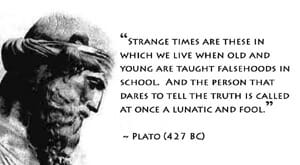 The son of a wealthy and noble family, Plato (427-347 B.C.) was preparing for a career in politics when the trial and eventual execution of Socrates (399 B.C.) changed the course of his life. He abandoned his political career and turned to philosophy, opening a school on the outskirts of Athens dedicated to the Socratic search for wisdom. Plato’s school, then known as the Academy, was the first university in western history and operated from 387 B.C. until A.D. 529, when it was closed by Justinian.
Unlike his mentor Socrates, Plato was both a writer and a teacher. His writings are in the form of dialogues, with Socrates as the principal speaker. In the Allegory of the Cave, Plato described symbolically the predicament in which mankind finds itself and proposes a way of salvation. The Allegory presents, in brief form, most of Plato’s major philosophical assumptions: his belief that the world revealed by our senses is not the real world but only a poor copy of it, and that the real world can only be apprehended intellectually; his idea that knowledge cannot be transferred from teacher to student, but rather that education consists in directing student’s minds toward what is real and important and allowing them to apprehend it for themselves; his faith that the universe ultimately is good; his conviction that enlightened individuals have an obligation to the rest of society, and that a good society must be one in which the truly wise (the Philosopher-King) are the rulers.
The Allegory of the Cave can be found in Book VII of Plato’s best-known work, The Republic, a lengthy dialogue on the nature of justice. Often regarded as a utopian blueprint, The Republic is dedicated toward a discussion of the education required of a Philosopher-King.
The following selection is taken from the Benjamin Jowett translation (Vintage, 1991), pp. 253-261. As you read the Allegory, try to make a mental picture of the cave Plato describes. Better yet, why not draw a picture of it and refer to it as you read the selection. In many ways, understanding Plato’s Allegory of the Cave will make your foray into the world of philosophical thought much less burdensome.
The Allegory
[Socrates] And now, I said, let me show in a figure how far our nature is enlightened or unenlightened: –Behold! human beings living in a underground cave, which has a mouth open towards the light and reaching all along the cave; here they have been from their childhood, and have their legs and necks chained so that they cannot move, and can only see before them, being prevented by the chains from turning round their heads. Above and behind them a fire is blazing at a distance, and between the fire and the prisoners there is a raised way; and you will see, if you look, a low wall built along the way, like the screen which marionette players have in front of them, over which they show the puppets.
[Glaucon] I see.
[Socrates] And do you see, I said, men passing along the wall carrying all sorts of vessels, and statues and figures of animals made of wood and stone and various materials, which appear over the wall? Some of them are talking, others silent.
[Glaucon] You have shown me a strange image, and they are strange prisoners.
[Socrates] Like ourselves, I replied; and they see only their own shadows, or the shadows of one another, which the fire throws on the opposite wall of the cave?
[Glaucon] True, he said; how could they see anything but the shadows if they were never allowed to move their heads?
[Socrates] And of the objects which are being carried in like manner they would only see the shadows?
[Glaucon] Yes, he said.
[Socrates] And if they were able to converse with one another, would they not suppose that they were naming what was actually before them?
[Glaucon] Very true.
[Socrates] And suppose further that the prison had an echo which came from the other side, would they not be sure to fancy when one of the passers-by spoke that the voice which they heard came from the passing shadow?
[Glaucon] No question, he replied.
[Socrates] To them, I said, the truth would be literally nothing but the shadows of the images.
[Glaucon] That is certain.
[Socrates] And now look again, and see what will naturally follow if the prisoners are released and disabused of their error. At first, when any of them is liberated and compelled suddenly to stand up and turn his neck round and walk and look towards the light, he will suffer sharp pains; the glare will distress him, and he will be unable to see the realities of which in his former state he had seen the shadows; and then conceive some one saying to him, that what he saw before was an illusion, but that now, when he is approaching nearer to being and his eye is turned towards more real existence, he has a clearer vision, -what will be his reply? And you may further imagine that his instructor is pointing to the objects as they pass and requiring him to name them, -will he not be perplexed? Will he not fancy that the shadows which he formerly saw are truer than the objects which are now shown to him?
[Glaucon] Far truer.
[Socrates] And if he is compelled to look straight at the light, will he not have a pain in his eyes which will make him turn away to take and take in the objects of vision which he can see, and which he will conceive to be in reality clearer than the things which are now being shown to him?
[Glaucon] True, he now.
[Socrates] And suppose once more, that he is reluctantly dragged up a steep and rugged ascent, and held fast until he ‘s forced into the presence of the sun himself, is he not likely to be pained and irritated? When he approaches the light his eyes will be dazzled, and he will not be able to see anything at all of what are now called realities.
[Glaucon] Not all in a moment, he said.
[Socrates] He will require to grow accustomed to the sight of the upper world. And first he will see the shadows best, next the reflections of men and other objects in the water, and then the objects themselves; then he will gaze upon the light of the moon and the stars and the spangled heaven; and he will see the sky and the stars by night better than the sun or the light of the sun by day?
[Glaucon] Certainly.
[Socrates] Last of he will be able to see the sun, and not mere reflections of him in the water, but he will see him in his own proper place, and not in another; and he will contemplate him as he is.
[Glaucon] Certainly.
[Socrates] He will then proceed to argue that this is he who gives the season and the years, and is the guardian of all that is in the visible world, and in a certain way the cause of all things which he and his fellows have been accustomed to behold?
[Glaucon] Clearly, he said, he would first see the sun and then reason about him.
[Socrates] And when he remembered his old habitation, and the wisdom of the cave and his fellow-prisoners, do you not suppose that he would felicitate himself on the change, and pity them?
[Glaucon] Certainly, he would.
[Socrates] And if they were in the habit of conferring honors among themselves on those who were quickest to observe the passing shadows and to remark which of them went before, and which followed after, and which were together; and who were therefore best able to draw conclusions as to the future, do you think that he would care for such honors and glories, or envy the possessors of them? Would he not say with Homer,
Better to be the poor servant of a poor master,
and to endure anything, rather than think as they do and live after their manner?
[Glaucon] Yes, he said, I think that he would rather suffer anything than entertain these false notions and live in this miserable manner.
[Socrates] Imagine once more, I said, such an one coming suddenly out of the sun to be replaced in his old situation; would he not be certain to have his eyes full of darkness?
[Glaucon] To be sure, he said.
[Socrates] And if there were a contest, and he had to compete in measuring the shadows with the prisoners who had never moved out of the cave, while his sight was still weak, and before his eyes had become steady (and the time which would be needed to acquire this new habit of sight might be very considerable) would he not be ridiculous? Men would say of him that up he went and down he came without his eyes; and that it was better not even to think of ascending; and if any one tried to loose another and lead him up to the light, let them only catch the offender, and they would put him to death.
[Glaucon] No question, he said.
[Socrates] This entire allegory, I said, you may now append, dear Glaucon, to the previous argument; the prison-house is the world of sight, the light of the fire is the sun, and you will not misapprehend me if you interpret the journey upwards to be the ascent of the soul into the intellectual world according to my poor belief, which, at your desire, I have expressed whether rightly or wrongly God knows. But, whether true or false, my opinion is that in the world of knowledge the idea of good appears last of all, and is seen only with an effort; and, when seen, is also inferred to be the universal author of all things beautiful and right, parent of light and of the lord of light in this visible world, and the immediate source of reason and truth in the intellectual; and that this is the power upon which he who would act rationally, either in public or private life must have his eye fixed.
[Glaucon] I agree, he said, as far as I am able to understand you.
[Socrates] Moreover, I said, you must not wonder that those who attain to this beatific vision are unwilling to descend to human affairs; for their souls are ever hastening into the upper world where they desire to dwell; which desire of theirs is very natural, if our allegory may be trusted.
[Glaucon] Yes, very natural.
[Socrates] And is there anything surprising in one who passes from divine contemplations to the evil state of man, misbehaving himself in a ridiculous manner; if, while his eyes are blinking and before he has become accustomed to the surrounding darkness, he is compelled to fight in courts of law, or in other places, about the images or the shadows of images of justice, and is endeavoring to meet the conceptions of those who have never yet seen absolute justice?
[Glaucon] Anything but surprising, he replied.
[Socrates] Any one who has common sense will remember that the bewilderments of the eyes are of two kinds, and arise from two causes, either from coming out of the light or from going into the light, which is true of the mind’s eye, quite as much as of the bodily eye; and he who remembers this when he sees any one whose vision is perplexed and weak, will not be too ready to laugh; he will first ask whether that soul of man has come out of the brighter light, and is unable to see because unaccustomed to the dark, or having turned from darkness to the day is dazzled by excess of light. And he will count the one happy in his condition and state of being, and he will pity the other; or, if he have a mind to laugh at the soul which comes from below into the light, there will be more reason in this than in the laugh which greets him who returns from above out of the light into the cave.
[Glaucon] That, he said, is a very just distinction.
[Socrates] But then, if I am right, certain professors of education must be wrong when they say that they can put a knowledge into the soul which was not there before, like sight into blind eyes.
[Glaucon] They undoubtedly say this, he replied.
[Socrates] Whereas, our argument shows that the power and capacity of learning exists in the soul already; and that just as the eye was unable to turn from darkness to light without the whole body, so too the instrument of knowledge can only by the movement of the whole soul be turned from the world of becoming into that of being, and learn by degrees to endure the sight of being, and of the brightest and best of being, or in other words, of the good.
[Glaucon] Very true.
[Socrates] And must there not be some art which will effect conversion in the easiest and quickest manner; not implanting the faculty of sight, for that exists already, but has been turned in the wrong direction, and is looking away from the truth?
[Glaucon] Yes, he said, such an art may be presumed.
[Socrates] And whereas the other so-called virtues of the soul seem to be akin to bodily qualities, for even when they are not originally innate they can be implanted later by habit and exercise, the of wisdom more than anything else contains a divine element which always remains, and by this conversion is rendered useful and profitable; or, on the other hand, hurtful and useless. Did you never observe the narrow intelligence flashing from the keen eye of a clever rogue –how eager he is, how clearly his paltry soul sees the way to his end; he is the reverse of blind, but his keen eyesight is forced into the service of evil, and he is mischievous in proportion to his cleverness.
[Glaucon] Very true, he said.
[Socrates] But what if there had been a circumcision of such natures in the days of their youth; and they had been severed from those sensual pleasures, such as eating and drinking, which, like leaden weights, were attached to them at their birth, and which drag them down and turn the vision of their souls upon the things that are below –if, I say, they had been released from these impediments and turned in the opposite direction, the very same faculty in them would have seen the truth as keenly as they see what their eyes are turned to now.
[Glaucon] Very likely.
[Socrates] Yes, I said; and there is another thing which is likely. or rather a necessary inference from what has preceded, that neither the uneducated and uninformed of the truth, nor yet those who never make an end of their education, will be able ministers of State; not the former, because they have no single aim of duty which is the rule of all their actions, private as well as public; nor the latter, because they will not act at all except upon compulsion, fancying that they are already dwelling apart in the islands of the blest.
[Glaucon] Very true, he replied.
[Socrates] Then, I said, the business of us who are the founders of the State will be to compel the best minds to attain that knowledge which we have already shown to be the greatest of all-they must continue to ascend until they arrive at the good; but when they have ascended and seen enough we must not allow them to do as they do now.
[Glaucon] What do you mean?
[Socrates] I mean that they remain in the upper world: but this must not be allowed; they must be made to descend again among the prisoners in the cave, and partake of their labors and honors, whether they are worth having or not.
[Glaucon] But is not this unjust? he said; ought we to give them a worse life, when they might have a better?
[Socrates] You have again forgotten, my friend, I said, the intention of the legislator, who did not aim at making any one class in the State happy above the rest; the happiness was to be in the whole State, and he held the citizens together by persuasion and necessity, making them benefactors of the State, and therefore benefactors of one another; to this end he created them, not to please themselves, but to be his instruments in binding up the State.
[Glaucon] True, he said, I had forgotten.
[Socrates] Observe, Glaucon, that there will be no injustice in compelling our philosophers to have a care and providence of others; we shall explain to them that in other States, men of their class are not obliged to share in the toils of politics: and this is reasonable, for they grow up at their own sweet will, and the government would rather not have them. Being self-taught, they cannot be expected to show any gratitude for a culture which they have never received. But we have brought you into the world to be rulers of the hive, kings of yourselves and of the other citizens, and have educated you far better and more perfectly than they have been educated, and you are better able to share in the double duty. Wherefore each of you, when his turn comes, must go down to the general underground abode, and get the habit of seeing in the dark. When you have acquired the habit, you will see ten thousand times better than the inhabitants of the cave, and you will know what the several images are, and what they represent, because you have seen the beautiful and just and good in their truth. And thus our State which is also yours will be a reality, and not a dream only, and will be administered in a spirit unlike that of other States, in which men fight with one another about shadows only and are distracted in the struggle for power, which in their eyes is a great good. Whereas the truth is that the State in which the rulers are most reluctant to govern is always the best and most quietly governed, and the State in which they are most eager, the worst.
[Glaucon] Quite true, he replied.
[Socrates] And will our pupils, when they hear this, refuse to take their turn at the toils of State, when they are allowed to spend the greater part of their time with one another in the heavenly light?
[Glaucon] Impossible, he answered; for they are just men, and the commands which we impose upon them are just; there can be no doubt that every one of them will take office as a stern necessity, and not after the fashion of our present rulers of State.
[Socrates] Yes, my friend, I said; and there lies the point. You must contrive for your future rulers another and a better life than that of a ruler, and then you may have a well-ordered State; for only in the State which offers this, will they rule who are truly rich, not in silver and gold, but in virtue and wisdom, which are the true blessings of life. Whereas if they go to the administration of public affairs, poor and hungering after the’ own private advantage, thinking that hence they are to snatch the chief good, order there can never be; for they will be fighting about office, and the civil and domestic broils which thus arise will be the ruin of the rulers themselves and of the whole State.
[Glaucon] Most true, he replied.
[Socrates] And the only life which looks down upon the life of political ambition is that of true philosophy. Do you know of any other?
[Glaucon] Indeed, I do not, he said.
[Socrates] And those who govern ought not to be lovers of the task? For, if they are, there will be rival lovers, and they will fight.
[Glaucon] No question.
[Socrates] Who then are those whom we shall compel to be guardians? Surely they will be the men who are wisest about affairs of State, and by whom the State is best administered, and who at the same time have other honors and another and a better life than that of politics?
[Glaucon] They are the men, and I will choose them, he replied.
[Socrates] And now shall we consider in what way such guardians will be produced, and how they are to be brought from darkness to light, — as some are said to have ascended from the world below to the gods?
[Glaucon] By all means, he replied.
[Socrates] The process, I said, is not the turning over of an oyster-shell, but the turning round of a soul passing from a day which is little better than night to the true day of being, that is, the ascent from below, which we affirm to be true philosophy?
[Glaucon] Quite so.
If you have enjoyed this section, perhaps found it illuminating, you might want to check out what else is down the rabbit hole. What really  happened to Neo in that movie? Is it really possible? Could there be an underlying reality to all of this – and could anyone learn to access it? If you follow the white rabbit all the way down, there is no going back. You will be changed forever. Sometimes that’s just the thing we need. Follow the white rabbit if you’re ready to wake up and face the music.